Clinical Principles of Skin Care After Chemical Peel Procedures
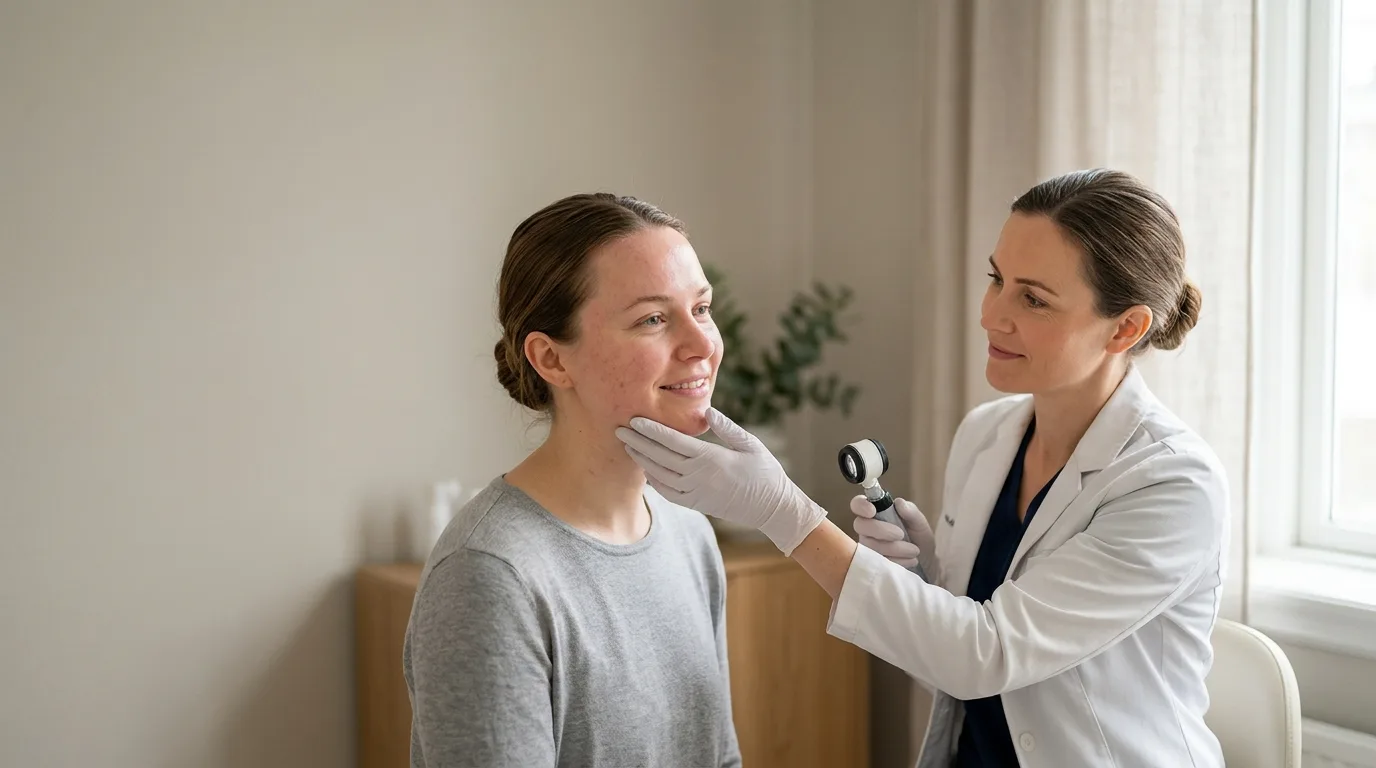
Post-chemical peel care centers on re-establishing the disrupted stratum corneum, reducing elevated transepidermal water loss, and soothing procedural inflammation. Applying barrier-supportive emollient moisturizers, avoiding secondary mechanical irritation, and maintaining rigorous photoprotection facilitate physiological re-epithelialization while minimizing the risk of prolonged erythema or dyschromia.
Proper skin care after chemical peel procedures is essential to ensure orderly stratum corneum rehabilitation, reduce transient procedural erythema, and limit transepidermal water loss (TEWL). When superficial or medium-depth chemical peels are administered, they deliberately alter the uppermost layers of the epidermis to encourage cellular renewal. Navigating the immediate post-peel period requires a systematic approach based on cutaneous biology, focusing on barrier support, hydration maintenance, and defense against ambient environmental stressors.\n\nUnderstanding the cellular shifts that occur during this regenerative interval allows individuals to tailor their daily routines effectively. Rather than seeking aggressive interventions, post-procedural care prioritizes non-irritating emollients, physical protection, and gentle cleansing agents to support the biological cascade of tissue renewal without causing secondary irritation 31613532.\n\n## What Happens to the Skin Barrier During and Immediately After a Chemical Peel?\n\nChemical peels function through controlled chemoexfoliation of the epidermis. Depending on the concentration, pKa, and molecular structure of the applied acid, the treatment selectively destabilizes the desmosomal junctions linking mature corneocytes. This process disrupts the intercellular lipid matrix composed of ceramides, cholesterol, and free fatty acids, removing layers of the stratum corneum 31613532.\n\nThe primary biophysical consequence of this controlled exfoliation is a marked disruption in the skin's barrier function. Under normal physiological conditions, the stratum corneum acts as an impermeable shield that prevents excessive moisture evaporation and protects against external xenobiotics. Following chemical resurfacing, transepidermal water loss (TEWL) rises measurably, reflecting an impaired barrier state 37335807.\n\nIn addition to elevated TEWL, chemical peeling agents alter cutaneous surface pH. Healthy human skin typically exhibits an acidic surface mantle, ranging from pH 4.5 to 5.5, which regulates enzymatic activities responsible for desquamation and lipid synthesis. The introduction of peeling agents—such as glycolic acid or polyhydroxy acids like gluconolactone—temporarily alters this microenvironment, initiating distinct physiological responses 37335807.\n\nWhile alpha hydroxy acids rapidly loosen intercellular bonds, gentler agents such as gluconolactone alter surface parameters while preserving a degree of barrier integrity, influencing both surface sebum levels and cutaneous hydration kinetics 37335807. Regardless of the specific peeling agent selected, the underlying dermis and surviving basal keratinocytes register the procedure as a controlled injury. This prompts microscopic inflammation and an orchestrated wound-healing response characterized by transient erythema, heightened sensitivity, and subsequent cellular turnover 31613532.\n\n## Essential Skin Care After Chemical Peel: How Barrier Lipids Support Recovery\n\nThe regenerative phase immediately following clinical resurfacing demands a protective topical environment. Re-epithelialization relies on the migration and proliferation of viable keratinocytes across the denuded epidermal bed. If the cutaneous surface remains excessively dry or dehydrated, cellular migration is impaired, extending the duration of peeling and visible flaking 33763749.\n\nTopical moisturizers serve as an artificial stratum corneum while the physiological lipid matrix regenerates. Formulations containing physiologic lipids—specifically physiological ratios of ceramides, free fatty acids, and cholesterol—integrate into disrupted intercellular spaces. Clinical evaluations demonstrate that applying targeted topical moisturizers following alpha hydroxy acid peels significantly improves subjective sensations of stinging, dryness, and tightness while visibly reducing post-peel desquamation 31322804.\n\nOcclusive and emollient ingredients play complementary roles during this rehabilitation window. Emollients smooth the rough, micro-fissured texture created by separating corneocytes, whereas mild occlusives create a semi-permeable film that limits moisture vapor loss. By helping to normalize elevated TEWL, appropriate moisturizing systems preserve hydration within the healing tissue, fostering an optimal biological environment for barrier restoration 31322804, 33763749.\n\nIt is equally important that post-procedure formulations remain free of volatile alcohols, fragrance fractions, and high concentrations of active botanicals. In a state of compromised barrier integrity, molecules that normally cause no reaction can penetrate directly to sensory nerve endings and immunocompetent Langerhans cells, provoking contact dermatitis or prolonging inflammatory erythema. Plain, physiologically harmonious formulations remain the standard recommendation for post-peel re-epithelialization 33763749.\n\n## Which Daily Habits Prevent Complications and Maintain Barrier Integrity?\n\nMinimizing procedural complications requires adherence to protective daily habits alongside the application of supportive topical products. Mechanical trauma is one of the most common causes of post-peel adverse events. As the coagulated or loosened stratum corneum begins to separate, visible flaking or sheet-like peeling often occurs. Patients must strictly avoid picking, scratching, or manually peeling this non-viable tissue 31613532.\n\nPremature manual detachment of desquamating corneocytes can pull away deeper, incompletely re-epithelialized layers of the epidermis. This inadvertent trauma exposes immature keratinocytes, significantly prolonging post-procedure erythema and markedly increasing the incidence of post-inflammatory hyperpigmentation, particularly in higher Fitzpatrick phototypes 31613532, 33763749. All forms of secondary physical exfoliants, including cleansing brushes, microdermabrasion scrubs, and rough cleansing towels, must be eliminated until the skin barrier has fully normalized.\n\nRigorous photoprotection represents another cornerstone of post-peel management. Following chemical exfoliation, the loss of melanin-containing upper corneocytes combined with subclinical cutaneous inflammation renders the skin exceptionally susceptible to ultraviolet radiation. Unprotected exposure to UVA and UVB light during this delicate phase can stimulate melanocytes, resulting in uneven pigmentation patterns and persistent post-inflammatory dyschromia 33763749.\n\nA broad-spectrum, high-protection topical sunscreen should be incorporated into the morning routine once initial re-epithelialization has begun, and reapplied at regular two-hour intervals during daytime exposure. Formulations utilizing physical or mineral filters, such as zinc oxide or titanium dioxide, are often preferred immediately post-procedure because of their low potential for chemical irritation on sensitized skin 33763749.\n\nPatients should also exercise caution regarding water temperature and cleansing habits. Hot water acts as an effective solvent for the remaining natural lipids, accelerating moisture depletion and aggravating erythema. Lukewarm water coupled with mild, syndet-based or non-foaming liquid cleansers allows for the gentle removal of daily impurities without stripping the fragile, nascent barrier 31322804.\n\n## Monitoring Cutaneous Recovery and Professional Follow-Up\n\nWhile mild redness, warmth, dryness, and minor edema are expected physiological sequelae of chemical peels, unusual clinical trajectories require professional evaluation. Normal superficial peel recovery typically resolves within three to seven days, during which visible flaking peaks and subsides as fresh corneocyte layers take their place 31613532.\n\nIf erythema persists beyond the expected time frame, or if localized oozing, intense burning, crusting, or pustular eruptions arise, these signs may indicate contact sensitization, an unmasked dermatosis, or secondary cutaneous complications. In such instances, individuals should discontinue all non-essential topical products and consult their treating dermatologist or aesthetic physician for a targeted clinical assessment 33763749.\n\nAdhering to an evidence-based, medically guided post-care routine ensures that chemical exfoliation achieves its intended cosmetic purpose of improving skin surface texture and tone while preserving the essential protective functions of the epidermal barrier 31613532, 33763749.
Key takeaways
- Chemical peels temporarily disrupt the stratum corneum, leading to increased transepidermal water loss (TEWL) and altered cutaneous pH.
- Systematic application of emollient and occlusive barrier moisturizers helps mitigate dryness, scaling, and procedural irritation during re-epithelialization.
- Manual picking or mechanical exfoliation of desquamating tissue must be avoided to minimize the risk of prolonged erythema and post-inflammatory hyperpigmentation.
- Consistent, broad-spectrum photoprotection is mandatory to shield newly resurfaced, UV-sensitive epidermal tissue from pigmentary changes.
- Unusual symptoms such as persistent erythema, oozing, or severe discomfort warrant prompt re-evaluation by a supervising healthcare professional.
Frequently asked questions
- How long does the skin barrier take to recover following a superficial chemical peel?
- Following a superficial chemical peel, initial re-epithelialization and barrier stabilization generally occur within three to seven days. During this timeframe, transepidermal water loss progressively returns toward baseline levels as new corneocytes reach the stratum corneum [PMID:31613532].
- Which cosmetic ingredients should be avoided during the immediate post-peel recovery phase?
- During the early recovery phase, products containing direct chemical exfoliants (alpha and beta hydroxy acids), retinoids, high concentrations of ascorbic acid, alcohol-based astringents, and artificial fragrances should be avoided to prevent secondary irritation and inflammatory flare-ups [PMID:33763749].
- Why does transepidermal water loss increase significantly after chemical exfoliation?
- Transepidermal water loss increases because chemical peels chemically dissolve or disrupt the lipid-rich intercellular matrix and shed outer corneocytes, compromising the semi-permeable boundary that normally impedes water evaporation [PMID:37335807].
- How does rigorous sun protection contribute to post-peel barrier rehabilitation?
- Resurfaced skin has a thinned protective layer and elevated inflammatory mediators, making it vulnerable to ultraviolet light. High-protection broad-spectrum sunscreens shield vulnerable keratinocytes and melanocytes, reducing the risk of post-inflammatory hyperpigmentation and photodamage [PMID:33763749].
References
- Cosmetic use of three topical moisturizers following glycolic acid facial peels — Journal of cosmetic dermatology · 2020
- [Pre- and post-interventional skin care for laser and peel treatments] — Der Hautarzt; Zeitschrift fur Dermatologie, Venerologie, und verwandte Gebiete · 2021
- Evaluation of the effects of 10% and 30% gluconolactone chemical peel on sebum, pH, and TEWL — Journal of cosmetic dermatology · 2023
- Chemical Peels for Skin Resurfacing — 2023

This content is for information only and does not replace a medical consultation. Consult your doctor about your own situation.