Damaged Skin Barrier vs Purging: How to Identify and Manage Cutaneous Reactions
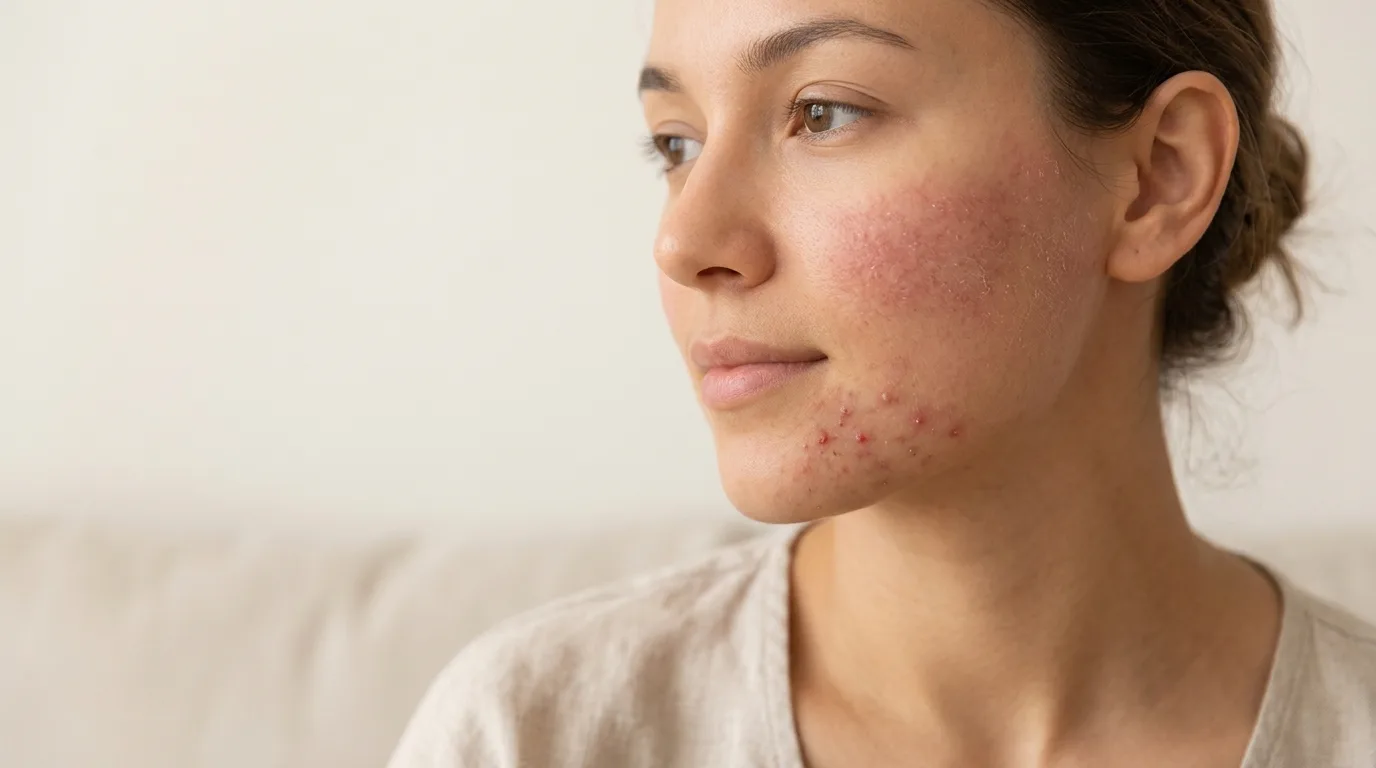
Purging is a temporary reaction to ingredients that accelerate cell turnover, surfacing pre-existing microcomedones in habitual breakout areas without widespread irritation. In contrast, barrier damage involves stratum corneum disruption and elevated transepidermal water loss, causing diffuse erythema, flaking, burning sensations, and hypersensitivity across previously clear skin zones.
Navigating modern skincare regimens often involves introducing concentrated physiological ingredients that temporarily alter skin dynamics. When confronting post-application flaking, redness, or eruptions, distinguishing a damaged skin barrier vs purging becomes critical for selecting an appropriate corrective approach. While both presentations can emerge shortly after altering a topical routine, their cellular mechanisms, clinical appearances, and management protocols diverge significantly.
Purging reflects accelerated follicular clearance provoked by specific keratolytic substances, whereas a compromised cutaneous envelope indicates structural failure within the superficial skin layers. Misinterpreting barrier breakdown as a routine purge often leads individuals to persist with aggressive topicals, which inadvertently exacerbates inflammation, heightens reactivity, and delays physiological recovery.
What Biological Mechanisms Distinguish Purging From Epidermal Barrier Breakdown?
To understand the difference between these two cutaneous responses, one must evaluate the cellular architecture of the epidermis. Purging is strictly tied to compounds that stimulate epidermal proliferation and enhance physiological cell turnover. Beneath the skin surface, microcomedones develop over several weeks from accumulated sebum, shed corneocytes, and follicular cohesion. Under normal conditions, these subclinical impactions slowly mature into visible comedones or resolve spontaneously. Keratolytic agents, including topical retinoids, alpha-hydroxy acids, and beta-hydroxy acids, shorten the keratinocyte desquamation cycle, compelling these latent impactions to surface simultaneously. Consequently, purging does not generate novel lesions out of thin air; rather, it rapidly unmasks existing subclinical congestion.
Conversely, an impaired epidermal barrier represents structural failure within the stratum corneum, the outermost layer often conceptualized as a brick-and-mortar assembly. In this model, protein-rich corneocytes constitute the bricks, while intercellular lamellar lipid bilayers—composed primarily of ceramides, cholesterol, and free fatty acids—act as the mortar. Pathogenesis studies demonstrate that baseline cutaneous vulnerability and inflammatory tendencies are fundamentally connected to structural lipid imbalances within the stratum corneum 39668545. When exogenous physical friction, harsh surfactants, or inappropriate cosmetic exfoliation strip away these lipid matrices, the cohesion between corneocytes deteriorates.
This structural breakdown leads to a sharp increase in transepidermal water loss, which quantifies the passive diffusion of moisture from the interior viable layers out through the stratum corneum 37953512. As cellular hydration plummets, endogenous desquamation enzymes malfunction, causing patchy, incomplete shedding rather than organized turnover. Furthermore, the thinning and fracturing of this defensive envelope expose sensory nerve endings to environmental triggers, while shifting the microenvironment of the cutaneous microbiome. The resulting inflammatory signaling pathways trigger localized vasodilation, swelling, and burning sensations that bear no biological relationship to the orderly follicular clearing observed during cell turnover acceleration.
Damaged Skin Barrier vs Purging: Which Signs and Symptoms Help Tell Them Apart?
Although both issues can coincide with visible cutaneous distress, distinct phenotypic patterns help clarify whether the skin is clearing congestion or suffering structural compromise.
| Assessment Parameter | Active Ingredient Purging | Compromised Epidermal Barrier | |:--- |:--- |:--- | | Primary Lesion Type | Non-inflammatory comedones, superficial papules, small pustules | Diffuse erythema, micro-fissures, xerosis, papular irritation | | Symptom Localization | Habitual breakout areas (oily T-zone, chin, jawline) | Diffuse distribution, extending across previously clear zones (e.g., cheeks, orbital perimeter) | | Sensory Sensation | Absent to mild localized tenderness around active papules | Persistent stinging, tightness, burning, heightened reactivity during bland product application | | Underlying Texture | Smooth skin surrounding localized follicular lesions | Rough, parched, sandpaper-like texture with visible micro-flaking | | Transepidermal Water Loss | Remains within physiologic baseline in unaffected zones | Significantly elevated across the skin surface 37953512 |
Lesion Morphology and Spatial Distribution
During a standard purge, eruptions remain predominantly follicular. They present as classic open or closed comedones, along with mild erythematous papules or superficial pustules that resolve relatively rapidly without extensive peripheral inflammation. Critically, these lesions almost exclusively emerge in locations where the individual consistently experiences follicular occlusion, such as the mandibular line, forehead, or central face. The surrounding epidermal surface maintains its baseline appearance, with normal turgor and resilience.
Conversely, barrier compromise manifests across broad anatomical fields, frequently affecting delicate zones where congested pores rarely form, such as the malar cheeks, temples, and periorbital margins. Instead of discrete comedones, barrier damage produces diffuse erythema, patchy scaling, and rough, crinkled cutaneous texture reminiscent of fine parchment. In severe instances, micro-fissuring occurs alongside a generalized, hive-like irritant dermatitis characterized by uniform pinpoint papules that lack central comedonal plugs.
Sensory Discomfort and Cutaneous Reactivity
Sensory cues provide reliable clinical indicators. Purging rarely alters cutaneous neurosensory thresholds outside of the transient tenderness associated with an active inflammatory papule. Basic personal care items, such as neutral moisturizers or mineral sunscreens, cause no discomfort when applied.
In contrast, elevated transepidermal water loss and stratum corneum disruption directly unmask unmyelinated C-nerve fibers within the superficial dermis. This neurosensory sensitization produces immediate burning, stinging, or heat upon the application of even basic, physiologically inert formulations, including pure tap water, simple humectant emulsions, or bland occlusives. Individuals typically report persistent cutaneous tightness, pruritus, and a heightened reactivity to ambient humidity shifts, wind exposure, or temperature changes.
How Do Timeline, Regimen Duration, and Ingredients Pinpoint the Trigger?
A careful examination of product formulations and exposure timelines assists in pinpointing whether skin is acclimating to renewed cell turnover or deteriorating into mechanical and chemical irritation.
Formulations That Can Induce Purging
Purging is physiologically limited to substances that modulate cellular proliferation, differentiation, or follicular keratolysis. Classic triggering ingredients include:
- Topical retinoids (e.g., retinol, retinaldehyde, prescription retinoic acid derivatives)
- Alpha-hydroxy acids (e.g., glycolic acid, lactic acid, mandelic acid)
- Beta-hydroxy acids (e.g., salicylic acid)
- Poly-hydroxy acids (e.g., gluconolactone, lactobionic acid)
- Specific peeling agents, such as azelaic acid or high-potency L-ascorbic acid preparations
If a cutaneous eruption arises shortly after introducing a formulation devoid of cell-renewing or keratolytic properties—such as a basic nourishing cream, facial oil, non-exfoliating serum, or mineral sunscreen—the reaction cannot be classified as purging. Such occurrences indicate either acute barrier irritation, formulation intolerance, or an occlusive comedogenic reaction.
Chronological Patterns and Resolution Timelines
The human epidermal renewal cycle requires approximately 28 days in healthy young adults, extending to 40 to 50 days as skin matures. Because purging relies entirely on expediting this cycle, the resultant follicular activity typically manifests within the first two weeks of initiating the active compound, peaks around the third or fourth week, and consistently subsides by six to eight weeks. As the microcomedone reservoir empties, the complexion displays improved texture and reduced congestion.
Barrier impairment follows a discordant chronological pattern. Disruption can materialize within hours of aggressive chemical exposure or evolve insidiously over several weeks of subtle chronic over-exfoliation. Unlike purging, barrier dysfunction exhibits no spontaneous resolution while the inciting topical regimen continues. As intercellular lipids are progressively depleted, erythema deepens, skin flaking intensifies, and secondary breakouts escalate due to localized dysbiosis and stratum corneum instability 39668545. The presentation deteriorates continually until active interventions are suspended and intensive lipid replenishing care is instituted.
Can Barrier Dysfunction Provoke Secondary Breakouts?
A common diagnostic dilemma occurs when barrier disruption creates eruptions that closely resemble acne vulgaris, confounding consumer evaluations. When the physical stratum corneum envelope is stripped, cutaneous moisture retention drops, causing compensatory changes in sebum composition. To counteract surface dehydration, the pilosebaceous unit may increase sebum output, yet this lipid mixture frequently exhibits an altered ratio of squalene, free fatty acids, and wax esters.
Concurrently, the desquamation process stalls because the hydrolytic enzymes responsible for separating corneodesmosomes require an adequately hydrated ambient substrate to function. This deficit leads to retention hyperkeratosis, where clumps of dried, un-shed corneocytes aggregate within follicular funnels. Coupled with baseline microvascular inflammation and altered local microenvironmental conditions, this retention facilitates follicular impactions, generating secondary papules and micro-pustules. While visually comparable to comedonal acne, these eruptions represent an irritant folliculitis secondary to stratum corneum degradation rather than autonomous acnegenic activity. Treating these dehydration-induced blemishes with stronger keratolytic topicals simply exacerbates structural lipid loss, prolonging cutaneous damage.
Best Practices for Supporting Stratum Corneum Recovery
When assessment confirms stratum corneum breakdown rather than physiological purging, personal care practices must pivot toward protection, lipid replenishing, and inflammation abatement.
Suspending Active Keratolytic Agents
The primary intervention involves halting all products designed to accelerate cell turnover or strip surface sebum. This requires discontinuing alpha- and beta-hydroxy acids, retinoids, mechanical scrubs, cleansing brushes, and astringents containing denatured alcohol. Cleansing routines should rely solely on neutral, non-foaming, lipid-sparing syndet cleansers that respect the physiological cutaneous pH (around 4.5 to 5.5) without depleting existing intercellular lipids 33196748.
Replenishing Intercellular Lipids With Physiological Formulations
Restoring an impaired stratum corneum requires topical supplementation of structural lipid precursors that mirror the physiological skin architecture. Modern research underlines that ceramide-dominant formulations substantially accelerate cutaneous envelope repair, restore normative transepidermal water loss dynamics, and markedly improve overall tolerability when incorporated into dermatological regimens 37605504, 33196748. Formulations incorporating balanced ratios of ceramides, physiological cholesterol, and non-esterified fatty acids integrate smoothly into intercellular domains, helping reorganize lipid lamellae and sealing microscopic tears in the stratum corneum.
Complementary supportive humectants, such as glycerin, low-molecular-weight hyaluronic acid, and panthenol, draw ambient water into the dehydrated layers, creating the optimal aqueous environment required for intrinsic enzymatic recovery. Occlusive topicals, such as petrolatum, squalane, or dimethicone, supply an external shield that diminishes immediate evaporation, allowing the underlying tissue to regenerate without environmental interference.
Photoprotection and Gentle Sun Care
Damaged epidermal barriers are acutely susceptible to ultraviolet radiation, which can aggravate erythema and worsen post-inflammatory hyperpigmentation. Sun protection is essential, yet delicate, reactive skin can sting when exposed to chemical UV filters. Mineral sunscreen preparations formulated with micronized zinc oxide or titanium dioxide offer broad photoprotection while soothing sensitive tissue and shielding compromised stratum corneum areas from environmental assault. Sunscreen formulations must be reapplied every two hours during sustained daytime exposure to maintain their protective barrier.
Reintroducing Actives Slowly and Safely
Once transepidermal water loss returns to physiological ranges—characterized by the absence of stinging, resolution of erythema, and restoration of smooth cutaneous turgor—active ingredients may be reintroduced systematically under the guidance of a physician or dermatologist. Utilizing a buffered application technique (applying a ceramide-rich moisturizer before the active agent) or adopting a graduated schedule (starting once or twice weekly) supports skin tolerance while minimizing the risk of recurrent barrier collapse 37605504. If diffuse irritation or uncharacteristic breakouts resurface, the product frequency must be scaled back immediately to safeguard epidermal equilibrium.
Key takeaways
- Purging is exclusively triggered by active ingredients that accelerate cell turnover, such as retinoids and exfoliating hydroxy acids.
- Barrier disruption causes elevated transepidermal water loss, presenting as stinging, diffuse erythema, rough texture, and hypersensitivity.
- Purge-related blemishes emerge strictly in habitual breakout zones and resolve within four to six weeks as follicular microcomedones clear.
- A compromised barrier requires pausing all keratolytic actives and prioritizing ceramide-dominant, lipid-replenishing topical care.
- Persistent stinging from bland personal care products or water is a primary clinical indicator of stratum corneum breakdown rather than purging.
Frequently asked questions
- How long does skin purging typically last after starting a new active ingredient?
- Skin purging typically lasts between four and six weeks, which corresponds to the duration of one complete epidermal renewal cycle. In mature skin, this turnover process can extend up to eight weeks. If inflammatory papules, flaking, or irritation persist beyond this timeframe without sign of improvement, the skin is most likely suffering from barrier disruption or an adverse intolerance to the formulation rather than cell turnover acclimation.
- Can a damaged skin barrier cause breakouts that look like acne?
- Yes. Severe stratum corneum disruption leads to retention hyperkeratosis, where dehydrated, un-shed corneocytes clump together and occlude follicular openings. This structural failure, combined with compensatory changes in sebum composition and local dysbiosis, can provoke diffuse inflammatory papules and micro-pustules. These lesions mimic acne vulgaris but stem directly from structural barrier failure.
- What physiological symptoms indicate an allergic contact reaction instead of purging?
- Allergic contact dermatitis is distinguished by intense pruritus (itching), sudden periorbital or facial edema, localized vesicular weeping, and widespread erythema that extends far beyond the areas where follicular microcomedones occur. Purging rarely itches and does not present with cutaneous swelling or blister formation. Suspected allergic reactions necessitate immediate product cessation and evaluation by a physician.
- How does transepidermal water loss correlate with cutaneous discomfort and stinging?
- Transepidermal water loss quantifies the evaporation of moisture through the stratum corneum. When lipid bilayers degrade and this loss elevates, the outer protective shield thins, permitting micro-fissures to form. This structural breakdown leaves superficial unmyelinated nerve fibers exposed to topical ingredients and ambient air, triggering immediate stinging, burning sensations, and heightened cutaneous reactivity.
References
- Skin Barrier Dysfunction in Acne Vulgaris: Pathogenesis and Therapeutic Approaches — Medical science monitor : international medical journal of experimental and clinical research · 2024
- Insights into acne and the skin barrier: Optimizing treatment regimens with ceramide-containing skincare — Journal of cosmetic dermatology · 2023
- Choosing the Right Partner: Complementing Prescription Acne Medication With Over-the-Counter Cleansers and Moisturizers — Journal of drugs in dermatology : JDD · 2020
- WASP: Wearable Analytical Skin Probe for Dynamic Monitoring of Transepidermal Water Loss — ACS sensors · 2023

This content is for information only and does not replace a medical consultation. Consult your doctor about your own situation.