How to Fade Red Stretch Marks: Dermatological Evidence and Topical Care Strategies
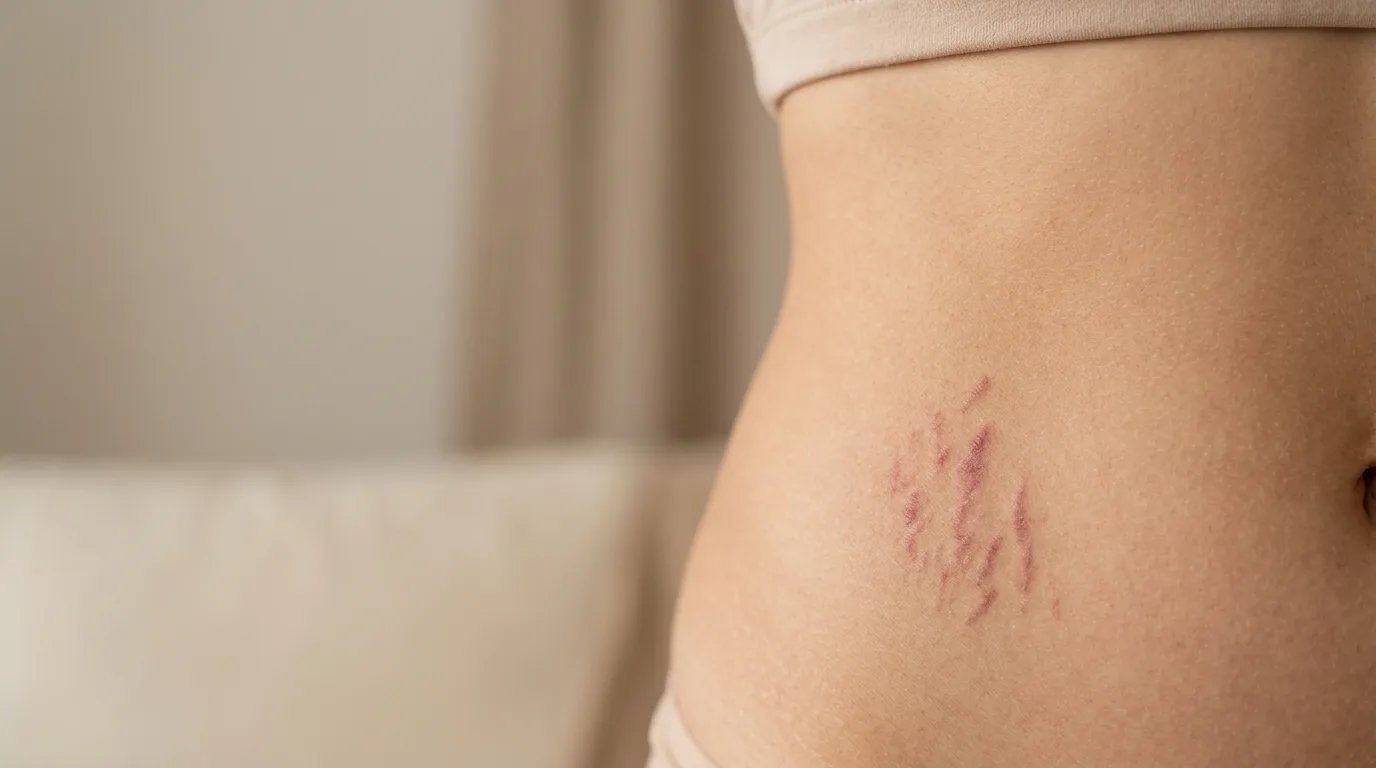
Early red stretch marks (striae rubra) represent an active phase marked by inflammation, microvascular dilation, and structural fiber remodeling. While no method completely eliminates them, targeted topical ingredients such as retinoids, botanical oils, and recombinant collagen, alongside barrier hydration and dermatological procedures, can help soften textural roughness and diminish the visual prominence of early erythema during this responsive window.
Individuals seeking to understand how to fade red stretch marks often encounter conflicting cosmetic claims. In dermatology, early-stage stretch marks are clinically termed striae rubra. These erythematous, slightly raised, or flattened linear lesions represent an acute, active cutaneous response to rapid mechanical tension and hormonal fluctuations. Because striae rubra maintain ongoing microvascular circulation and active structural remodeling, they present a critical clinical window where targeted dermocosmetic care and procedural interventions demonstrate the greatest visual improvement 28551068. Understanding the cellular dynamics of this phase enables individuals and skincare professionals to implement realistic, evidence-based approaches to soften their appearance.
What Distinguishes Early-Stage Red Stretch Marks (Striae Rubra)?
Striae distensae develop when rapid expansion of underlying tissue exceeds the tensile thresholds of the dermis, common during growth spurts, rapid weight fluctuation, muscle expansion, and pregnancy (striae gravidarum). The initial clinical manifestation—striae rubra—is characterized by prominent pink, red, or violaceous hues. This distinct color is not mere surface discoloration; it reflects microvascular ectasia, local inflammation, and capillary dilation within the superficial and mid-dermis 28551068.
Histologically, early lesions exhibit perivascular lymphocytic infiltration, mast cell degranulation, and edema in the perivascular spaces. Simultaneously, the dermal extracellular matrix experiences micro-structural disruption. The tightly woven mesh of collagen fibers separates, while elastic fibers uncoil, stretch, and undergo progressive elastolysis 28551068. Over months to years, this active inflammatory phase typically burns out, yielding mature striae alba—atrophic, hypopigmented, scar-like linear bands with reduced vascularity and dense, horizontally packed collagen bundles. Similar to resolving cutaneous inflammation in other contexts—such as the vascular pathways discussed in Post-Acne Marks: Mechanisms, Vascular Pathways, and Evidence-Based Topical Care—early intervention during the active vascular stage remains paramount for aesthetic improvement 28551068.
Because metabolic activity and microcirculation remain high during the rubra phase, cellular responsiveness to topical agents and energy-based modalities is significantly higher than in mature, fibrotic striae alba. Systematic reviews confirm that addressing the vascular component and supporting the remodeling dermis early yields markedly superior aesthetic outcomes 28551068.
How to Fade Red Stretch Marks with Evidence-Based Topical Ingredients
Topical care serves as the frontline approach for managing striae distensae, especially when formulated to address surface xerosis, support epidermal barrier integrity, and promote extracellular matrix organization.
Topical Retinoids and Cellular Turnover
Topical retinoids, most notably topical tretinoin, are among the most rigorously investigated agents for expanding striae distensae 28551068. Tretinoin operates by binding to nuclear retinoic acid receptors, thereby accelerating epidermal renewal and promoting organized extracellular matrix remodeling within expanding dermis. In randomized clinical evaluations, the daily application of topical tretinoin over several months has demonstrated measurable reductions in both the width and surface irregularity of striae rubra 30893166.
Because topical tretinoin can induce cutaneous side effects such as localized erythema, scaling, and photosensitivity, dermatologists often recommend slow titration and barrier-supporting moisturizers. Furthermore, prescription retinoids are contraindicated during pregnancy and breastfeeding, highlighting the necessity for professional dermatological supervision and alternative dermocosmetic selections during these specific phases.
Plant Oils and Soothing Botanical Formulations
Botanical lipids play an essential role in softening tissue tension and replenishing the stratum corneum lipid matrix. Clinical investigations have evaluated the efficacy of botanical oils, such as sweet almond oil, alongside soothing plant extracts like Aloe vera in striae gravidarum 28521546. In nulliparous women, randomized comparative trials established that topical applications of Aloe vera gel and sweet almond oil notably diminished the intensity and progression of stretch mark formation while alleviating associated pruritus 28521546.
These natural emollients operate primarily by reinforcing lipid bilayer cohesion, limiting transepidermal water loss (TEWL), and providing anti-inflammatory polyphenols. Maintaining elevated hydration levels preserves tissue pliability, allowing skin to adapt to sustained mechanical tension with less catastrophic dermal micro-tearing 28521546.
Formulations with Plant Extracts and Antioxidant Vitamins
Specialized cosmetic oil and emollient blends containing plant extracts (such as chamomile, lavender, and calendula) suspended with vitamins A and E have undergone observational clinical assessments 33934473. In a longitudinal study examining subjects with established stretch marks and cutaneous xerosis, the regular twice-daily application of a botanical oil formulation resulted in statistically significant improvements in skin barrier hydration and a marked reduction in the visual severity of the marks over an eight-week evaluation period 33934473. The sustained delivery of lipophilic antioxidants helps mitigate oxidative stress within mechanically strained skin, assisting the natural tissue remodeling cascade.
Topical Recombinant Human Collagen Serums
Advances in biotechnology have introduced topical recombinant human collagen serums into clinical dermatology. Historically, native animal-derived collagen molecules were considered too bulky to influence dermal signaling directly, functioning purely as humectants. However, modern engineered recombinant human collagen formulations demonstrate remarkable biocompatibility and micro-relief smoothing 42454417.
In a clinical trial evaluating recombinant human collagen serum applied to striae gravidarum, researchers observed a statistically significant improvement in skin surface roughness and cutaneous dryness over successive weeks of use 42454417. By optimizing the micro-environment of the stratum corneum and supplying biologically identical peptide fragments, these topical formulations help refine texture, lessen the tactile indentation of early marks, and enhance skin suppleness 42454417.
How Do Energy-Based Technologies and Microneedling Complement Topical Support?
While daily dermocosmetic care establishes baseline hydration and surface renewal, clinical procedures executed by physicians can reach into the reticular dermis to address vascular ectasia and structural matrix disorganization 28551068.
Percutaneous Collagen Induction (Microneedling)
Microneedling has emerged as a cornerstone in procedural dermatology for managing striae distensae. By utilizing arrays of sterile micro-needles to create thousands of controlled microscopic mechanical punctures through the epidermis into the papillary and reticular dermis, microneedling triggers a localized wound-healing cascade without thermal ablation 31403543.
This mechanical stimulus promotes the release of endogenous growth factors, resulting in percutaneous collagen induction and elastin remodeling. In clinical studies evaluating subjects with striae distensae across varied Fitzpatrick skin types (including darker phototypes prone to dyschromia), microneedling demonstrated durable, long-term textural improvement and width reduction with an exceptionally low incidence of post-inflammatory hyperpigmentation 31403543. Because the epidermal barrier closes rapidly after treatment, procedural microneedling presents a favorable recovery profile when paired with post-procedure barrier creams.
Fractional Radiofrequency and Combination Therapies
Fractional radiofrequency (RF) delivers targeted thermal energy into the mid-to-deep dermis while sparing intervening zones of untreated tissue, facilitating rapid re-epithelialization. Sublative bipolar fractional RF systems have been formally investigated in combination with topical regimens 30893166.
In a randomized pilot study examining striae gravidarum, investigators compared the outcomes of fractional RF alone against fractional RF combined with nightly topical tretinoin 30893166. The combined protocol yielded statistically superior reductions in striae width, surface irregularity, and visual erythema compared to monotherapy, highlighting the clinical synergy achievable when pairing mechanical or thermal tissue contraction with active topical retinoid delivery 30893166.
| Modality / Ingredient | Primary Mechanism of Action | Evidence-Based Outcome | Key Clinical Considerations | |:--- |:--- |:--- |:--- | | Topical Retinoids (e.g., Tretinoin) | Accelerates epidermal turnover; promotes organized dermal matrix remodeling 28551068 | Documented reduction in striae width and surface irregularity 30893166 | Can cause dryness/erythema; strictly contraindicated in pregnancy | | Botanical Oils & Aloe Vera | Replenishes barrier lipids; limits TEWL; delivers soothing polyphenols 28521546 | Diminishes stretch mark development and eases pruritus 28521546 | High safety profile; suitable for supportive prenatal daily care | | Recombinant Human Collagen | Supplies skin-identical peptides; restores micro-relief hydration 42454417 | Alleviates skin roughness and xerosis in striae gravidarum 42454417 | Non-irritating dermocosmetic hydrator for daily barrier maintenance | | Percutaneous Microneedling | Creates mechanical micro-channels; triggers endogenous healing cascade 31403543 | Durable textural refinement and narrowing of striae 31403543 | Low risk of dyschromia; safe across diverse phototypes (Fitzpatrick I–VI) | | Fractional Radiofrequency | Delivers sublative thermal coagulation to deep dermal layers 30893166 | Enhanced structural compaction; synergistic with topicals 30893166 | In-office procedure requiring professional operator settings |
How Does Maintaining Skin Hydration Impact the Visibility of Red Stretch Marks?
Cutaneous hydration plays a pivotal role in how stretch marks are perceived visually. Dehydrated, xerotic skin scatters incident light erratically, which accentuates fine wrinkles, crinkling, and textural deviations across striae. When the stratum corneum is adequately saturated with physiological lipids, humectants (such as hyaluronic acid and glycerin), and emollient oils, the epidermal surface flattens, enhancing optical refraction and making the underlying erythematous line appear softer and less starkly defined 33934473, 42454417.
Beyond optical effects, hydration directly governs tissue biomechanics. Stratum corneum flexibility depends heavily on its water content; dry tissue possesses higher shear modulus and cracks or yields abruptly under mechanical stress. By routinely integrating barrier-restoring emollient formulations, individuals help maintain the tissue's tensile resilience, supporting cutaneous tolerance to stretching forces as outlined in Understanding Cutaneous Biomechanics: How to Improve Skin Elasticity and Matrix Integrity 28521546.
Clinical Considerations, Sun Protection, and Realistic Expectations
Managing early red stretch marks requires consistent application over months rather than weeks. Patients and consumers must understand that striae represent genuine structural shifts in dermal architecture; complete eradication is biologically unfeasible with current medical technology 28551068. Instead, therapeutic success is measured by softening color intensity, narrowing mark dimensions, and smoothing textural transitions so that the affected areas blend harmoniously into surrounding skin.
Photoprotection is an essential, often overlooked component of striae rubra care. Due to ongoing local inflammation and capillary dilation, fresh stretch marks are exceptionally vulnerable to ultraviolet-induced melanogenesis. Unprotected exposure to UV radiation can induce secondary post-inflammatory hyperpigmentation within the mark, converting an erythematous stria into an irregularly pigmented, dark brown line that is significantly harder to address cosmetically. Daily application of a broad-spectrum, high-protection sunscreen over exposed marks—reapplied every two hours during sun exposure—safeguards delicate tissue while vascular remodeling takes its natural course. For personalized advice, individuals should consult a board-certified dermatologist or qualified healthcare professional to build a regimen tailored to their skin type and physiological state.
Key takeaways
- Striae rubra represent an active, vascular inflammatory stage of stretch marks that responds significantly better to cosmetic and clinical care than mature, white striae alba [PMID:28551068].
- Topical retinoids, such as tretinoin, have demonstrated measurable clinical reductions in striae width and surface irregularity during early stages [PMID:30893166].
- Emollient formulations incorporating sweet almond oil, Aloe vera, and specialized botanical extracts help maintain barrier hydration, reduce roughness, and ease pruritus [PMID:28521546, PMID:33934473].
- Topical recombinant human collagen serum significantly improves skin dryness and surface roughness in striae gravidarum [PMID:42454417].
- Procedural options like microneedling and fractional radiofrequency promote deep tissue remodeling, showing safe, durable improvements across diverse skin phototypes [PMID:30893166, PMID:31403543].
- Daily broad-spectrum high-protection sun care and realistic expectations are essential to prevent secondary hyperpigmentation and support long-term aesthetic refinement.
Frequently asked questions
- Why are fresh stretch marks red or purple instead of white?
- Fresh stretch marks, known as striae rubra, appear red, pink, or purple because of underlying microvascular dilation and localized inflammation in the dermis [PMID:28551068]. As the skin stretches rapidly, structural fibers fracture, leading to capillary engorgement and inflammatory cell recruitment. As the marks mature over months or years, inflammation subsides, blood vessels recede, and the tissue becomes hypopigmented, atrophic white striae alba.
- Can topical ingredients completely erase early-stage stretch marks?
- No topical ingredient can completely erase stretch marks. Striae distensae represent permanent dermal matrix alterations with disrupted elastin and altered collagen networks [PMID:28551068]. However, evidence-based topical treatments—including retinoids, botanical oils, and recombinant collagen—can significantly improve skin surface smoothness, enhance hydration, and fade the visual intensity of erythema during the early rubra phase [PMID:30893166, PMID:42454417].
- How does maintaining skin hydration impact the visibility of red stretch marks?
- Maintaining optimal skin hydration plumps the stratum corneum, reduces light scattering caused by dryness, and smooths tactile roughness [PMID:33934473, PMID:42454417]. Hydrated skin also exhibits improved biomechanical elasticity, allowing tissue to withstand mechanical tension more effectively while minimizing noticeable surface crinkling [PMID:28521546].
- When is the best clinical window to address the appearance of striae distensae?
- The most effective therapeutic window is during the active striae rubra phase, while the marks are still erythematous and vascularized [PMID:28551068]. During this period, fibroblasts and endothelial cells are metabolically responsive, allowing both topical agents and procedures like microneedling or fractional radiofrequency to promote favorable tissue remodeling [PMID:30893166, PMID:31403543].
- Is it safe to use topical retinoids for stretch marks during pregnancy?
- Topical retinoids, such as tretinoin, are strictly contraindicated during pregnancy and breastfeeding due to potential teratogenic risks. Pregnant individuals seeking supportive care for striae gravidarum should opt for pregnancy-safe alternatives such as sweet almond oil, Aloe vera gel, or recombinant human collagen serums, under the guidance of an obstetrician or dermatologist [PMID:28521546, PMID:42454417].
References
- Therapeutic targets in the management of striae distensae: A systematic review — Journal of the American Academy of Dermatology · 2017
- Efficacy of recombinant human collagen serum for improving skin dryness and roughness in striae gravidarum: a clinical study — African journal of reproductive health · 2026
- Efficacy and Safety of a Sublative Bipolar Fractional Radiofrequency System Combined With Topical Tretinoin in Treating Striae Gravidarum: A Randomized Pilot Study — Dermatologic surgery : official publication for American Society for Dermatologic Surgery [et al.] · 2019
- The effect of Aloe vera gel and sweet almond oil on striae gravidarum in nulliparous women — The journal of maternal-fetal & neonatal medicine : the official journal of the European Association of Perinatal Medicine, the Federation of Asia and Oceania Perinatal Societies, the International Society of Perinatal Obstetricians · 2018
- Topical oil formulation of plant extracts and vitamins as effective treatment for stretch marks and xerosis-An observational longitudinal study — Journal of cosmetic dermatology · 2021
- Microneedling Treatment of Striae Distensae in Light and Dark Skin With Long-Term Follow-Up — Dermatologic surgery : official publication for American Society for Dermatologic Surgery [et al.] · 2020

This content is for information only and does not replace a medical consultation. Consult your doctor about your own situation.