Cica Skin Benefits: Scientific Evidence on Centella Asiatica and Epidermal Barrier Integrity
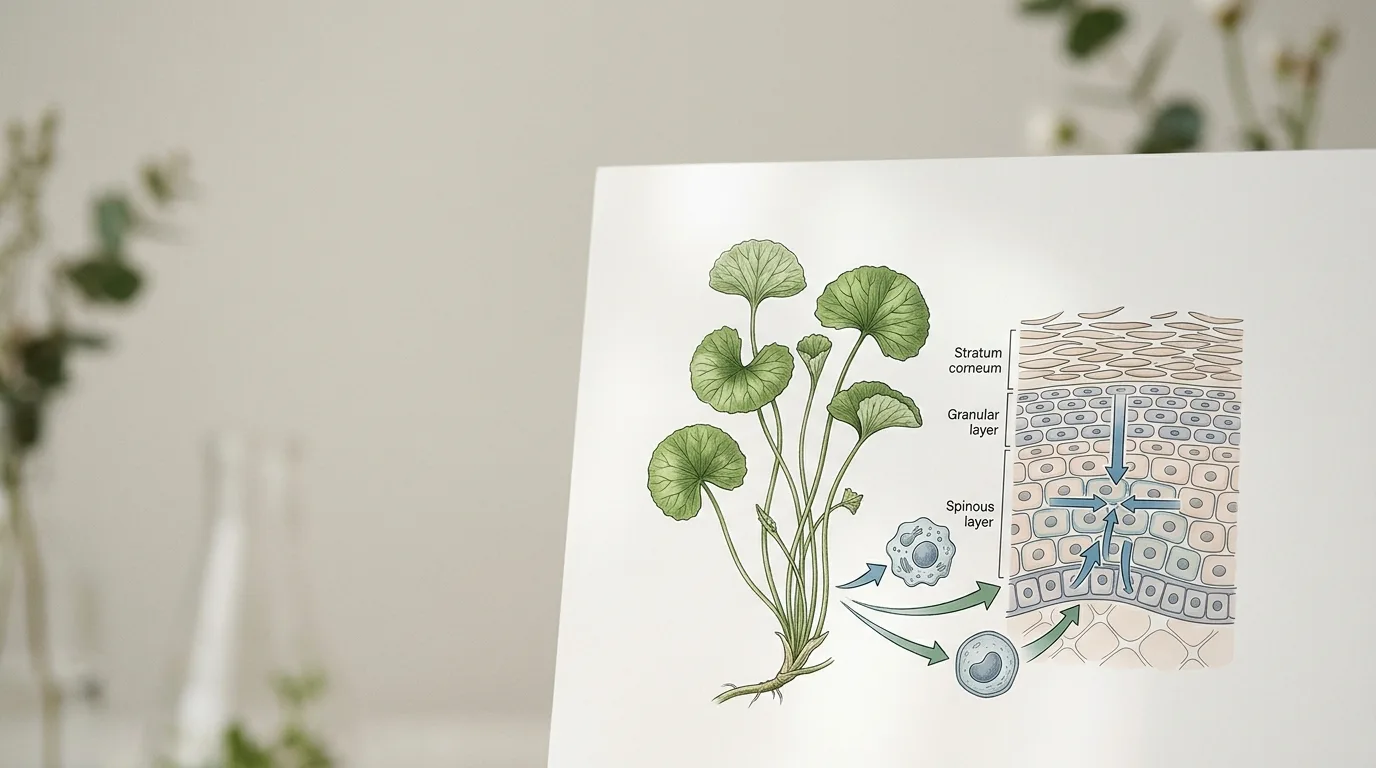
Centella asiatica, known as cica, supports cutaneous comfort through pentacyclic triterpenes such as madecassoside and asiaticoside. These compounds reinforce epidermal barrier function, improve moisture retention, and deliver antioxidant defense against external challenges like ultraviolet radiation and fine particulate matter. In cosmetic formulations, cica helps reduce visible redness and assists natural skin recovery while preserving cutaneous balance.
Understanding the clinical interest surrounding cica skin benefits requires an examination of botanical pharmacology, cellular physiology, and epidermal barrier dynamics. Centella asiatica, an herbaceous creeping plant indigenous to wetlands across Asia, has transitioned from traditional herbalism into modern dermocosmetic science. Contemporary investigations highlight the plant's capacity to calm visibly irritated skin, limit transepidermal water loss, and support overall skin appearance when compromised by climatic conditions, atmospheric pollution, or cosmetic procedures. Because topical cosmetic preparations do not operate as pharmaceuticals, understanding their role in supporting cutaneous homeostasis provides clarity for consumers and pharmacy professionals seeking rational skincare strategies.
What Biological Actives Enable Centella Asiatica to Modulate Cutaneous Health?
The therapeutic relevance of Centella asiatica resides primarily within its secondary metabolite profile, specifically a class of chemical constituents known as pentacyclic triterpenoids. The primary triterpenic components investigated in dermatological research comprise asiaticoside, madecassoside, asiatic acid, and madecassic acid. These molecular structures feature a hydrophobic triterpenoid backbone conjugated to hydrophilic sugar moieties in the case of the glycosides (asiaticoside and madecassoside), enabling variable degrees of cutaneous penetration and target-tissue engagement depending on topical vehicle formulation.
Asiaticoside serves as a primary triterpene constituent of Centella asiatica with documented pharmacokinetic properties that support extracellular matrix maintenance and cellular viability 36306932. Preclinical evaluations demonstrate that asiaticoside interacts with dermal fibroblasts and epidermal keratinocytes, modulating the signaling cascades responsible for matrix remodeling and cellular migration 36306932. Rather than forcing non-physiological biological shifts, asiaticoside fosters an optimal microenvironment wherein cutaneous cells sustain their normal metabolic activities and maintain tissue integrity 36306932.
Recent scientific investigations have scrutinized the physicochemical characteristics and direct topical benefits of standardized botanical preparations. Topical serum preparations containing Centella asiatica provide bioactivity that improves skin barrier indicators and exhibits antioxidant capabilities 40637214. These formulations assist in stabilizing the stratum corneum by reinforcing lipid cohesion and protecting structural proteins from oxidative insults 40637214. Through the coordinated actions of these triterpenic glycosides, cica extracts foster an epidermal architecture capable of withstanding everyday environmental challenges without triggering cellular irritation.
Which Specific Triterpenoids Contribute Most to Skin Barrier Replenishment?
Within the triterpenoid family found in Centella asiatica, madecassoside and asiaticoside represent the most extensively quantified compounds in high-performance cosmetic formulas. While asiaticoside exhibits notable stability and bioaffinity toward structural cellular components 36306932, madecassoside displays distinct physicochemical hydrophilicity due to additional hydroxyl substitutions on its core aglycone skeleton. This distinct structural conformation facilitates enhanced interaction with water-binding elements within the stratum corneum, allowing madecassoside to directly influence cutaneous surface hydration and epidermal barrier resilience 30452312.
When formulated into topical emulsions or serums, these triterpenoids work complementarily. Asiaticoside assists in cellular resilience against stressors that could otherwise disrupt dermal organization 36306932, while madecassoside modulates microenvironmental stress responses and diminishes the appearance of scaling and surface roughness 30452312. In dermocosmetic research, measuring physical parameters such as transepidermal water loss (TEWL) confirms that extract fractions containing balanced ratios of madecassoside and asiaticoside offer superior barrier support compared to isolated singular fractions 40637214.
Furthermore, the aglycones—asiatic acid and madecassic acid—often arise as enzymatic cleavage products or hydrolysis derivatives following topical application. These free acids possess distinct lipophilic profiles that enable interaction with intercellular lamellar lipid bilayers. By integrating into the lipid bilayers alongside ceramides, cholesterol, and free fatty acids, these compounds help reduce void spaces within the corneocyte matrix. This lipid-stabilizing action minimizes moisture evaporation, ensuring that the skin surface maintains its suppleness and natural elasticity over sustained daily use.
How Do Cica Skin Benefits Defend Against Environmental and Photodamage-Induced Stress?
Cutaneous tissue exists at the primary interface between the internal human physiology and external environmental stress. Among modern atmospheric aggressors, airborne particulate matter with aerodynamic diameters smaller than 2.5 micrometers (PM2.5) represents a substantial challenge to epidermal integrity. Particulate matter carries polycyclic aromatic hydrocarbons and heavy metals, which trigger intracellular reactive oxygen species (ROS) production, leading to lipid peroxidation and compromised barrier function.
Madecassoside has been demonstrated in vitro to alleviate cutaneous cellular damage induced by exposure to fine particulate matter (PM2.5) 40378615. Under conditions of simulated airborne pollution, madecassoside attenuates cellular apoptosis, reduces oxidative free radical generation, and preserves membrane integrity in exposed epidermal cells 40378615. By blunting pollution-induced cellular cytotoxicity, this triterpenoid prevents the downstream degradation of junctional proteins, allowing the skin to maintain its structural cohesion despite sustained exposure to urban pollutants 40378615.
Solar ultraviolet radiation represents another continuous environmental threat that accelerates visible signs of photoaging and impairs the structural framework of the skin. Ultraviolet B (UVB) wavelengths directly induce cellular DNA alterations, deplete endogenous cutaneous antioxidants, and elevate inflammatory mediators that break down extracellular matrix components. Experimental investigations show that extracts of Centella asiatica exhibit antioxidant and anti-inflammatory properties that attenuate UVB-induced photoaging and protect extracellular matrix components 41516082.
The mechanisms governing this photoprotective support involve scavenging free radicals and modulating transcription pathways that govern matrix breakdown. By limiting the oxidative degradation of collagenous proteins and preserving extracellular matrix architecture, Centella asiatica helps prevent the structural disorganization characteristic of photoaged skin 41516082. In cosmetic formulations, these botanical extracts provide supplementary environmental defense, working alongside daily broad-spectrum sun care strategies to maintain skin smoothness and visual firmness 41516082.
Through Which Pathways Does Centella Asiatica Enhance Hydration and Calm Discomfort?
Cutaneous discomfort, frequently manifested as sensations of stinging, dryness, tightness, and visible erythema, stems from underlying micro-inflammatory shifts in the epidermis. When the epidermal barrier is disrupted, exogenous irritants, commensal microflora alterations, and atmospheric changes prompt keratinocytes to release signaling cytokines that exacerbate discomfort. Scientific literature reveals that madecassoside demonstrates anti-inflammatory and hydration-improving effects in models of cutaneous challenge related to commensal microbial irritation 30452312.
In studies assessing cutaneous interactions with microbial stressors, madecassoside downregulates pro-inflammatory cytokines such as interleukin-1beta (IL-1β) and tumor necrosis factor-alpha (TNF-α), while concurrently promoting stratum corneum hydration levels 30452312. This dual action is crucial for sensitive and reactivity-prone skin types. Rather than simply functioning as an occlusive layer, madecassoside supports the biological pathways responsible for maintaining hydration, thereby diminishing cutaneous irritability without introducing harsh or occlusive agents 30452312.
Beyond localized microbial interactions, systemic inflammatory cascades often influence cutaneous reactivity. Advanced cellular research indicates that Centella asiatica extracts modulate inflammatory responses via regulatory pathways such as JAK/STAT3 signaling in cellular and animal models 37295572. The Janus kinase/signal transducer and activator of transcription (JAK/STAT) pathway plays a pivotal regulatory role in cytokine-mediated cutaneous disruption and hyperproliferative epidermal responses 37295572.
By attenuating phosphorylation events within the JAK/STAT3 axis, Centella asiatica compounds downregulate hyperactive inflammatory cascades, mitigating tissue stress and supporting calm, visibly settled skin 37295572. Through this regulatory modulation, cica extracts foster an environment conducive to epidermal normalization 37295572. Consequently, topical preparations containing standardized Centella asiatica extracts provide measurable cosmetic value for consumers navigating persistent cutaneous sensitivity, environmental windburn, post-cleansing tightness, or cosmetic intolerance 40637214.
Practical Application and Formulation Considerations in Dermocosmetics
When incorporating Centella asiatica products into a topical routine, formulation chemistry dictates performance. Dermocosmetic serums and emulsions that disclose standardized concentrations of triterpenic fractions—particularly purified madecassoside or titrated extracts of Centella asiatica (TECA)—offer predictable topical support compared to crude, unstandardized botanical preparations. Because pure triterpenoids demonstrate distinct polarity, cosmetic delivery systems utilizing liposomal encapsulation, nano-emulsions, or balancing humectant bases often achieve enhanced stratum corneum compatibility.
Cica-based formulations are generally suitable for morning and evening application. In daily morning regimens, they pair effectively with hydrating humectants such as hyaluronic acid and glycerin, providing an antioxidant layer beneath broad-spectrum sunscreen products. In evening regimens, their barrier-supporting properties complement restorative lipid formulations containing ceramides, squalane, and fatty acids, reinforcing the cutaneous barrier during nocturnal recovery cycles. For individuals undergoing non-invasive cosmetic procedures or seasonal climatic shifts, applying cica creams helps minimize visible redness and alleviate the sensation of tight, dehydrated skin.
Consumers should recognize that dermocosmetic products are formulated to support the visual health, hydration, and comfort of the cutaneous surface. They do not serve as prescription treatments for acute dermatological conditions. When persistent cutaneous eruptions, severe inflammatory reactions, or chronic barrier disorders manifest, consultation with a board-certified dermatologist or qualified healthcare provider remains necessary for clinical diagnosis and directed medical care.
Key takeaways
- Centella asiatica contains key pentacyclic triterpenes—primarily asiaticoside and madecassoside—that reinforce epidermal barrier integrity and soothe visible irritation [PMID:36306932, PMID:40637214].
- Preclinical research demonstrates that madecassoside alleviates cellular damage triggered by atmospheric particulate matter (PM2.5) by limiting oxidative stress [PMID:40378615].
- Extracts of Centella asiatica provide antioxidant defense against UVB-induced photoaging, assisting in the preservation of extracellular matrix structures [PMID:41516082].
- Madecassoside enhances stratum corneum hydration and dampens pro-inflammatory cytokines associated with microbial irritation [PMID:30452312].
- Biochemical investigations indicate that Centella asiatica modulates inflammatory signaling pathways, including JAK/STAT3, contributing to visible skin calming [PMID:37295572].
Frequently asked questions
- Which specific triterpenoids in Centella asiatica contribute most to skin barrier replenishment?
- Madecassoside and asiaticoside are the two primary pentacyclic triterpenoid glycosides responsible for barrier support. Asiaticoside supports cellular viability and extracellular matrix organization, while madecassoside improves stratum corneum hydration and helps soothe surface redness [PMID:36306932, PMID:30452312].
- How do cica extracts defend epidermal cells against atmospheric pollution and UV radiation?
- Cica extracts deliver potent antioxidant activity that neutralizes reactive oxygen species generated by fine particulate matter (PM2.5) and ultraviolet B radiation. In experimental models, madecassoside attenuates pollution-induced cellular apoptosis, while total Centella asiatica extracts help preserve extracellular matrix components during UV exposure [PMID:40378615, PMID:41516082].
- In what ways does madecassoside influence moisture retention in sensitive skin?
- Madecassoside reduces transepidermal water loss by supporting epidermal barrier cohesion. In cutaneous stress models, it downregulates inflammatory mediators while enhancing natural hydration markers, preventing the surface dryness and peeling often triggered by external irritants [PMID:30452312, PMID:40637214].
- How does Centella asiatica modulate cutaneous inflammatory signaling without causing adverse reactions?
- Centella asiatica downregulates pro-inflammatory signaling pathways, including the JAK/STAT3 cascade, which moderates cytokine release in irritated cutaneous tissue. This biological modulation calms visibly stressed skin while respecting the natural physiological equilibrium of the epidermis [PMID:37295572].
- Can Centella asiatica be used daily alongside other skincare actives?
- Yes. Centella asiatica is well-tolerated across diverse skin types and pairs smoothly with humectants, ceramides, and sun protection products. However, if persistent skin irritation, allergic contact reactions, or chronic cutaneous diseases occur, individuals should seek evaluation from a qualified physician or dermatologist.
References
- A review of pharmacokinetic and pharmacological properties of asiaticoside, a major active constituent of Centella asiatica (L.) Urb — Journal of ethnopharmacology · 2023
- Madecassoside alleviates PM(2.5)-induced skin cell damage — Biochemical and biophysical research communications · 2025
- Oral Centella asiatica Extract Attenuates UVB-Induced Skin Photoaging via Antioxidant, Anti-Inflammatory, and Extracellular Matrix-Preserving Effects in Hairless Mice — International journal of molecular sciences · 2025
- Bioactivity and physicochemical characterization of Centella asiatica and Marigold extract serums: Antioxidant, anti-inflammatory, anti-tyrosinase and skin barrier function insights — International journal of cosmetic science · 2025
- Centella asiatica alleviates psoriasis through JAK/STAT3-mediated inflammation: An in vitro and in vivo study — Journal of ethnopharmacology · 2023
- Propionibacterium acnes related anti-inflammation and skin hydration activities of madecassoside, a pentacyclic triterpene saponin from Centella asiatica — Bioscience, biotechnology, and biochemistry · 2019

This content is for information only and does not replace a medical consultation. Consult your doctor about your own situation.